Your home is more than just a place to live; it's a powerful financial asset. As market conditions, your credit profile, and life circumstances evolve, the mortgage you secured years ago may no longer be the best fit for your financial situation. Refinancing is not merely about chasing a lower interest rate; it is a strategic financial maneuver that can unlock significant savings, provide access to capital, and align your largest debt with your current goals.
Understanding the full spectrum of the benefits of refinancing mortgage is the first step toward making a confident, wealth-building decision. Whether you're a first-time homeowner watching rates drop, a self-employed professional with fluctuating income, or a real estate investor looking to optimize cash flow across multiple properties, a well-timed refinance can be a game-changer. It offers a direct path to reducing monthly payments, paying off your home faster, or tapping into your equity for other important investments.
In this comprehensive guide, we will break down the eight most impactful benefits of refinancing your mortgage. We will move beyond the basics, providing real-world examples, break-even calculations, and actionable insights to help you determine if now is the right time to restructure your home loan. We will explore scenarios for different types of borrowers, from those with traditional W-2 income to investors utilizing specialized loan products. Let’s explore how a simple refinance can reshape your financial future.
1. Lower Interest Rates and Reduced Monthly Payments
The most compelling reason homeowners explore refinancing is the opportunity to secure a lower interest rate, which directly translates into a smaller monthly mortgage payment. This is one of the primary benefits of refinancing a mortgage, offering immediate relief to your monthly budget and substantial long-term savings. When market rates drop or your personal financial standing improves, you can replace your existing high-rate loan with a new one on more favorable terms.
This strategy is especially powerful for borrowers who purchased their homes when rates were high or whose credit scores have significantly improved since their initial loan. A better credit profile often unlocks access to more competitive interest rates, rewarding your financial discipline.
How It Works in Practice
Let's look at a clear example. Imagine a homeowner has an outstanding mortgage balance of $300,000 with a 30-year fixed interest rate of 6.5%. Their principal and interest payment is approximately $1,896 per month.
If market rates improve and they refinance to a new 30-year loan at 5.5%, their new monthly payment would be about $1,703. This simple change saves them $193 every month, freeing up over $2,300 annually for other financial goals like investing, saving for education, or paying down other debts.
Key Insight: Even a 1% reduction in your interest rate can lead to significant savings. For many homeowners, especially those who bought during the 2022-2023 rate spikes, refinancing now presents a prime opportunity to slash their monthly housing costs.
Is This Benefit Right for You?
This approach provides the most value when:
- Market rates have fallen since you secured your original mortgage.
- Your credit score has improved by 20 points or more, making you eligible for better terms.
- You plan to stay in your home long enough to recoup the closing costs associated with the new loan.
Actionable Steps to Take
To maximize your savings, it's crucial to approach refinancing strategically.
- Calculate Your Break-Even Point: Divide the total closing costs by your monthly savings. For example, if closing costs are $4,000 and you save $193 per month, your break-even point is approximately 21 months ($4,000 / $193). If you plan to live in the home longer than that, refinancing is a financially sound decision.
- Shop for Rates: Don't accept the first offer you receive. At Mortgage Seven LLC, we shop your loan across a network of lenders to ensure you get the most competitive rate and terms available.
- Consider the Loan Term: Refinancing into a new 30-year loan will lower your payment but extend your repayment timeline. If possible, consider refinancing to a shorter term, like a 15-year or 20-year mortgage, to build equity faster and pay less interest over time.
2. Shortening Loan Term Without Significantly Increasing Payments
Another powerful benefit of refinancing a mortgage is the ability to shorten your loan term, often from a 30-year to a 15-year loan. This strategy accelerates your path to full homeownership, builds equity faster, and dramatically reduces the total interest you pay over the life of the loan. When interest rates are favorable, you can often make this switch without a drastic increase in your monthly payments.
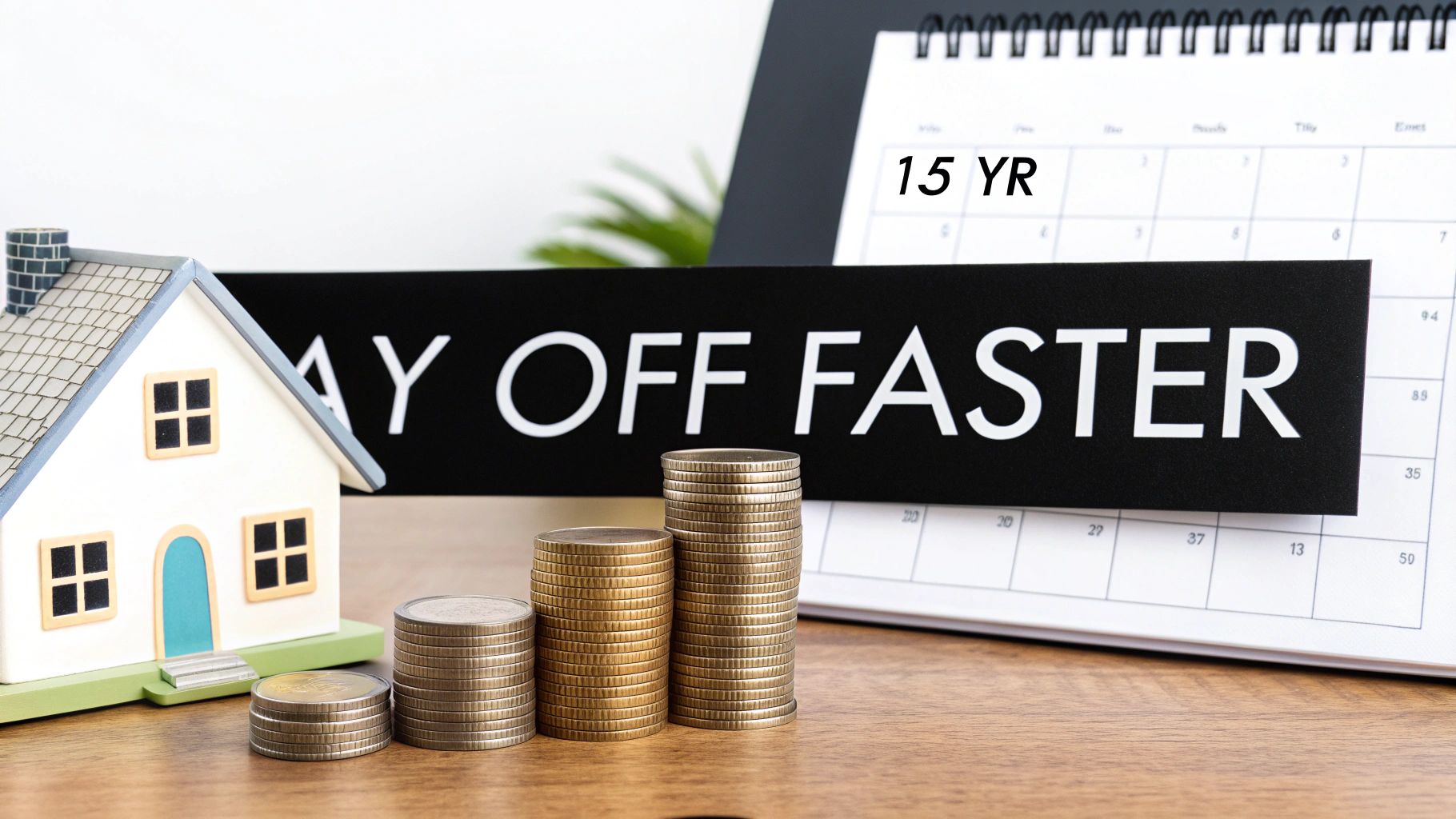
This approach is ideal for homeowners whose income has increased since they first bought their home, such as mid-career professionals or business owners with strong cash flow. By refinancing to a shorter term, they can align their mortgage with their long-term financial goals, like being debt-free by retirement.
How It Works in Practice
Consider a homeowner with a $300,000 balance on a 30-year loan at a 6% interest rate. Their principal and interest payment is approximately $1,799 per month. Over 30 years, they would pay over $347,500 in total interest.
If they refinance into a 15-year loan at a lower rate of 5.5%, their new monthly payment would be about $2,453. While the payment is $654 higher, they would pay off the loan 15 years sooner and pay only about $141,500 in total interest. This move saves them over $206,000 in interest and frees them from a mortgage payment a decade and a half earlier.
Key Insight: Paying off your mortgage faster means a larger portion of each payment goes toward your principal balance, not interest. This rapidly builds your home equity, giving you more financial flexibility and a larger net worth.
Is This Benefit Right for You?
Shortening your loan term is an excellent financial move when:
- Your household income has increased and you can comfortably afford a higher monthly payment.
- You prioritize long-term wealth building over having the lowest possible monthly payment.
- You plan to retire within the next 15-20 years and want to eliminate your mortgage beforehand.
Actionable Steps to Take
To ensure this strategy fits your financial picture, take these steps:
- Stress-Test Your Budget: Before committing, ensure you can handle the higher payment without straining your finances. Confirm you still have a healthy emergency fund and can meet other savings goals. At Mortgage Seven LLC, we can help you run affordability scenarios to build confidence in your decision.
- Compare Loan Terms: A 15-year term isn't the only option. Ask about 20-year or even 25-year loans, which still accelerate your payoff timeline but offer a more modest payment increase.
- Calculate Your Interest Savings: Use a mortgage calculator to see the exact amount you’ll save in interest over the life of the loan. The numbers often make the short-term budget adjustment well worth the long-term gain.
3. Cash-Out Refinancing for Home Improvements and Debt Consolidation
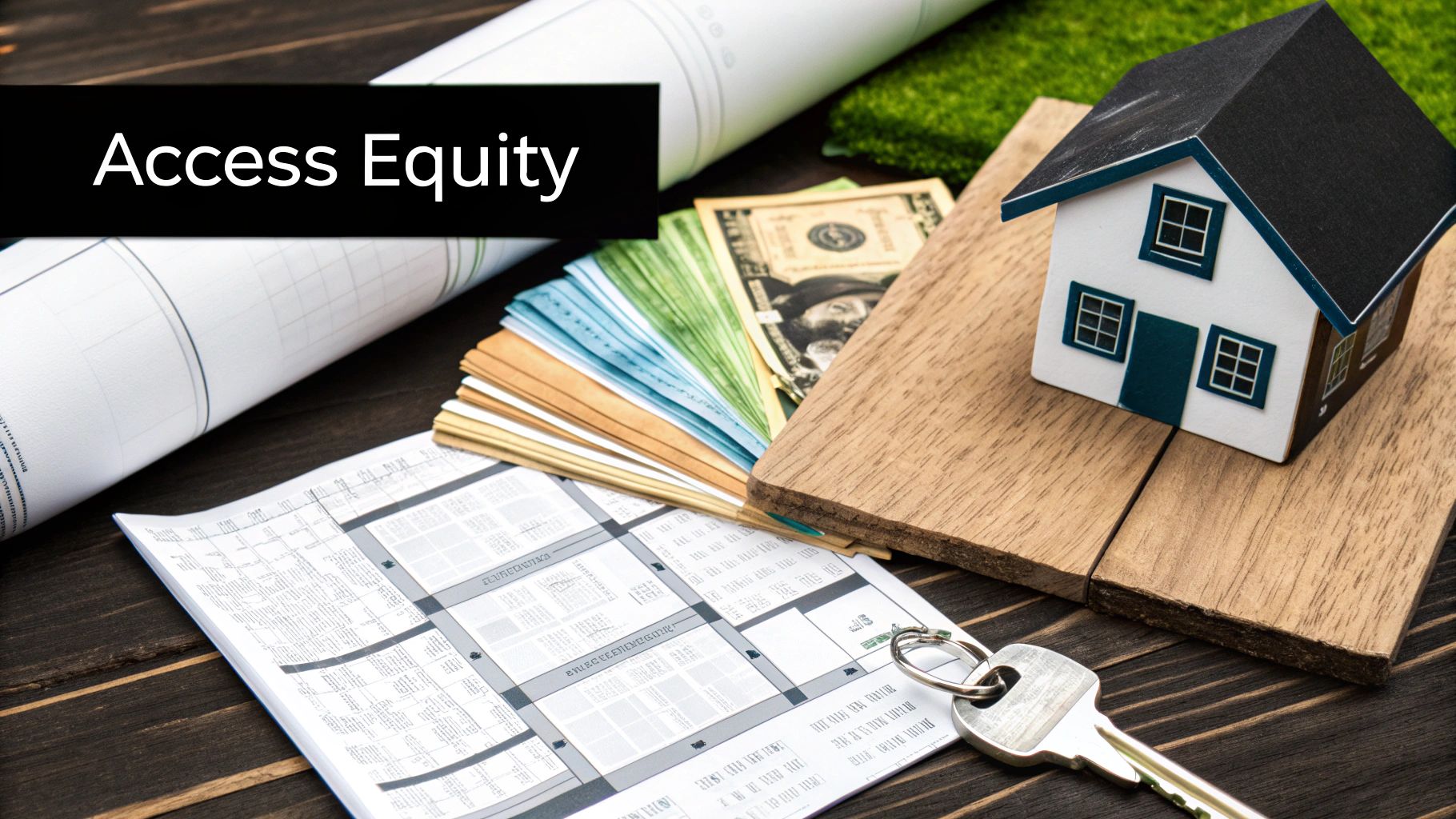
Another powerful benefit of refinancing a mortgage is the ability to tap into your home's equity to fund other significant financial goals. A cash-out refinance replaces your current mortgage with a new, larger loan, allowing you to borrow against your home equity and receive the difference in cash at closing. This strategy provides a lump sum that can be used for anything from major home renovations to consolidating high-interest debt.
This approach effectively turns your illiquid home equity into accessible cash, often at a much lower interest rate than you would find with personal loans or credit cards. It is an ideal solution for homeowners who have built substantial equity and need funding for large, planned expenses or strategic financial maneuvers.
How It Works in Practice
Imagine a homeowner whose property is valued at $400,000, and they have an outstanding mortgage balance of $220,000. They want to undertake a significant kitchen remodel estimated to cost $50,000. They can refinance their mortgage for a new loan amount of $270,000.
After paying off the original $220,000 loan, they receive $50,000 in cash to fund the renovation. If their original rate was 6.5% and they refinance to 5.75%, they not only get the cash they need but may also secure a lower rate on their entire mortgage balance, making it a very efficient way to borrow.
Key Insight: A cash-out refinance lets you leverage your largest asset to consolidate debt or invest back into your property, often at a more favorable rate than other forms of credit. This can be a smart move to eliminate high-interest credit card debt or increase your home's long-term value.
Is This Benefit Right for You?
This approach provides the most value when:
- You need funds for a large expense like a home renovation, college tuition, or a down payment on an investment property.
- You want to consolidate high-interest debt from credit cards or personal loans into a single, lower-rate monthly payment.
- You have significant equity built up in your home (typically, lenders require you to maintain at least 20% equity after the cash-out).
Actionable Steps to Take
To use your home's equity wisely, consider the following strategic steps.
- Define a Clear Purpose for the Funds: Only withdraw cash for investments that can improve your financial standing, such as value-adding home improvements or paying off toxic debt. Avoid using it for discretionary spending.
- Compare All Costs: Look beyond the interest rate. Factor in closing costs to understand the total cost of borrowing. A detailed breakdown of what a cash-out refinance entails can help you make an informed decision.
- Preserve an Equity Cushion: As a rule of thumb, aim to keep at least 15-20% equity in your home after the refinance. This provides a financial safety net for the future. At Mortgage Seven LLC, we can help self-employed borrowers and real estate investors structure their loans to meet these strategic goals.
4. Converting Adjustable-Rate Mortgages (ARMs) to Fixed-Rate Stability
For homeowners with an Adjustable-Rate Mortgage (ARM), one of the most powerful benefits of refinancing a mortgage is the ability to lock in long-term financial certainty. An ARM typically offers a low introductory interest rate for a set period, but afterward, the rate adjusts based on market conditions, creating unpredictable monthly payments. Refinancing from an ARM to a fixed-rate mortgage eliminates this volatility, providing a stable, unchanging payment for the life of the loan.
This move is especially critical for those whose introductory ARM period is nearing its end or for homeowners who initially planned to sell before the rate adjustments but now intend to stay longer. It transforms a variable housing expense into a predictable one, allowing for confident and precise long-term financial planning.
How It Works in Practice
Consider a homeowner with a $400,000 5/1 ARM taken out in 2019 at an initial rate of 3.5%. For the first five years, their principal and interest payment was a manageable $1,796. Now, facing their first rate adjustment in a higher-rate environment, their new rate could jump to 6.5% or more.
By refinancing to a 30-year fixed-rate loan at 5.75%, their new stable monthly payment would be approximately $2,334. While this is higher than their initial ARM payment, it protects them from the ARM adjusting even higher in the future, potentially to its cap of 8.5% or more, which would push their payment over $3,000. This proactive refinance prevents a potential payment shock and secures a predictable housing cost.
Key Insight: Refinancing an ARM to a fixed-rate loan is a defensive strategy that trades the risk of future rate hikes for the security of a predictable payment. It’s about controlling your financial future rather than leaving it to market fluctuations.
Is This Benefit Right for You?
This strategy provides the most value when:
- Your ARM's introductory period is set to expire within the next 6 to 12 months.
- Market forecasts predict rising interest rates, making future adjustments costly.
- Your life plans have changed, and you now intend to stay in your home longer than initially expected.
Actionable Steps to Take
To transition smoothly from an ARM to a fixed-rate loan, timing and preparation are key.
- Review Your ARM Documents: Identify your first adjustment date, the index your rate is tied to, the margin, and the rate caps. This information is crucial for comparing your potential adjusted payment to a new fixed-rate option.
- Refinance Before the Adjustment: Don't wait for your payment to increase. Start the refinancing process 3-6 months before your ARM is scheduled to adjust to lock in a favorable fixed rate.
- Model Different Scenarios: At Mortgage Seven LLC, we can help you calculate your potential ARM payments under various market scenarios and compare them against the fixed-rate options available today, providing a clear picture of your long-term savings and stability.
5. Improving Cash Flow for Self-Employed and Non-Traditional Income Borrowers
For self-employed borrowers, real estate investors, and those with non-traditional income, refinancing a mortgage offers a powerful opportunity to restructure debt and significantly improve monthly cash flow. Traditional lenders often rely on W-2s and tax returns, which may not accurately reflect the true financial health of a growing business. A strategic refinance can consolidate various debts or simply lower a housing payment, freeing up capital for business investment or personal use.
This benefit of refinancing a mortgage is especially valuable for entrepreneurs whose income has stabilized or grown since their initial home purchase. By leveraging alternative documentation methods like bank statements or profit and loss (P&L) statements, they can qualify for better loan terms that align with their current, stronger financial position.
How It Works in Practice
Consider a small business owner with a $400,000 mortgage. They also carry $50,000 in high-interest debt across a business line of credit and credit cards, with monthly payments totaling $1,200. Their income has grown consistently over the past two years.
By using a bank statement loan program to refinance, they consolidate everything into a new, single mortgage. This eliminates the high-interest debt payments, and even with a slightly larger mortgage, their new total monthly housing payment is lower than the previous mortgage plus debt payments combined. They successfully reduce their total monthly obligations by $800, dramatically improving their business and personal cash flow.
Key Insight: For non-traditional borrowers, a refinance isn't just about the interest rate. It's a strategic financial tool to prove your income stability, consolidate business debt, and unlock capital based on your actual cash flow, not just what tax returns show.
Is This Benefit Right for You?
This approach provides the most value when:
- You are self-employed and your business income has been consistent or growing for 18-24 months.
- You have multiple high-interest debts (business or personal) that could be consolidated into a single, lower-interest mortgage payment.
- You are a real estate investor looking to improve cash flow on your portfolio using a Debt-Service Coverage Ratio (DSCR) loan.
- You have strong, consistent bank deposits that provide a clearer picture of your income than your tax documents.
Actionable Steps to Take
To position yourself for a successful refinance as a non-traditional borrower, a focused approach is key.
- Maintain Meticulous Records: Your business bank statements are your most important qualification documents. Keep them clean, organized, and show consistent deposits to demonstrate a reliable income trend.
- Document All Income Streams: Prepare documentation for your primary business, side-hustles, rental properties, and any other sources of income. A comprehensive picture strengthens your application.
- Work with a Specialist: Don't waste time with lenders who don't understand your unique situation. At Mortgage Seven LLC, our loan officers are experts in non-traditional income scenarios. We understand the nuances of bank statement loans and other programs designed for entrepreneurs.
- Time Your Refinance: Lenders want to see a stable income trend. Aim to refinance after you have 18-24 months of consistent business deposits to build the strongest possible case for approval.
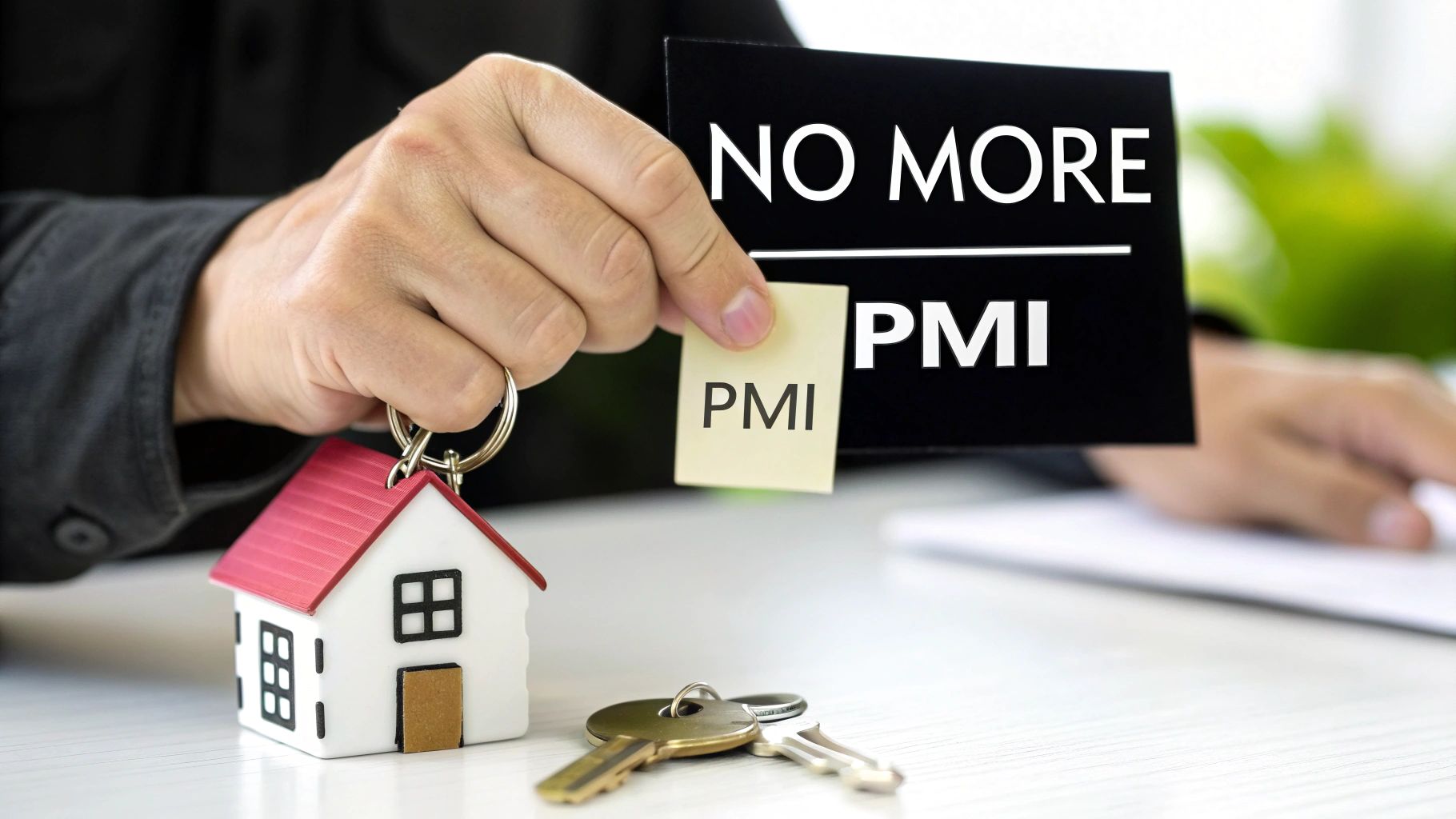
6. Removing Private Mortgage Insurance (PMI) Through Refinancing
For homeowners who made a down payment of less than 20%, Private Mortgage Insurance (PMI) is an extra monthly cost added to their mortgage payment. One of the most financially savvy benefits of refinancing a mortgage is the ability to eliminate this expense once you have built sufficient home equity. This strategy can lead to significant monthly savings without altering your interest rate or loan term.
By refinancing, you replace your old loan with a new one. If your home's value has increased or you've paid down enough of your principal, your new loan-to-value (LTV) ratio may be below the 80% threshold, thereby removing the lender's requirement for PMI.
How It Works in Practice
Consider a first-time homebuyer who purchased a $300,000 home with a 15% down payment ($45,000). Their initial loan is for $255,000, and they are required to pay $250 per month in PMI.
After three years of consistent payments and market appreciation, their home is now valued at $350,000, and their loan balance is down to $245,000. Their equity has grown to $105,000, which is 30% of the home's new value. By refinancing, they can eliminate the $250 monthly PMI payment, saving $3,000 annually.
Key Insight: Home price appreciation is a powerful tool for building equity quickly. If you bought your home even a few years ago, you may have enough equity to remove PMI now, unlocking immediate savings.
Is This Benefit Right for You?
This strategy provides the most value when:
- Your home value has appreciated significantly since you purchased it.
- You have made substantial principal payments on your existing mortgage.
- You have a conventional loan or an FHA loan where refinancing is the primary method to remove mortgage insurance.
Actionable Steps to Take
To successfully remove PMI, a strategic approach is essential.
- Calculate Your Current Equity: Regularly track your home's estimated value and your outstanding mortgage balance. You can get an estimate from online tools or ask a real estate professional for a comparative market analysis (CMA).
- Determine Your Break-Even Point: Compare the closing costs of the refinance against your monthly PMI savings. If closing costs are $5,000 and you save $250 per month, your break-even point is 20 months. If you plan to stay in the home longer, it's a worthwhile move. To learn more, explore our detailed guide on how to refinance to remove PMI.
- Get a Professional Appraisal: Mortgage Seven LLC can help you determine if your home’s current appraised value is high enough to support a refinance that eliminates PMI, guiding you through every step of the process.
7. Updating Loan Structure and Terms to Match Life Changes
Life is rarely static, and your mortgage shouldn't be either. Refinancing offers a powerful way to adapt your home loan to significant life events, ensuring your mortgage structure continues to support your evolving financial reality and future goals. This flexibility is one of the most strategic benefits of refinancing a mortgage, allowing you to transform your loan from a rigid obligation into a dynamic financial tool.
Whether you're celebrating a promotion, navigating a divorce, or preparing for retirement, your mortgage can be reshaped to fit your new circumstances. This might mean shortening your loan term to build equity faster after a salary increase or extending it to lower payments during a career transition.
How It Works in Practice
Consider a self-employed borrower whose business has seen significant growth over the past few years. They originally secured a 30-year mortgage with a 6.8% interest rate. Now, with a stronger and more predictable income stream, they want to pay off their home faster.
By refinancing to a 15-year fixed-rate loan at 5.8%, they can accelerate their equity growth and save a substantial amount in long-term interest. While their monthly payment might increase, the move aligns perfectly with their improved cash flow and goal of becoming debt-free sooner, positioning them for greater financial freedom in the future.
Key Insight: Your mortgage should evolve with you. Refinancing allows you to realign your loan's terms with major life milestones, from expanding your family to planning for retirement, ensuring it always serves your current financial strategy.
Is This Benefit Right for You?
This approach provides the most value when:
- You've experienced a significant change in income, such as a promotion, a new job, or a successful business venture.
- Your family structure has changed, through marriage, divorce, or an adult child moving in.
- You are approaching a major financial transition, like retirement, and need to adjust your monthly cash flow.
Actionable Steps to Take
To ensure your mortgage aligns with your life, consider these strategic actions.
- Conduct an Annual Financial Review: Just like a check-up with your doctor, review your mortgage annually to see if it still fits your financial health. Life changes can create new opportunities to optimize your loan.
- Model Different Scenarios: Before a major life event like retirement, work with a mortgage professional to explore different refinancing options. Seeing how a longer term could preserve your investment income, for example, can provide valuable clarity.
- Document Everything: If your income has changed due to a promotion, inheritance, or business growth, gather all the necessary documentation. At Mortgage Seven LLC, we can help you leverage these changes to secure better loan terms that match your new financial standing.
8. Securing Better Loan Terms and Conditions Through Improved Credit Profile
Your financial profile isn't static; it evolves over time. Refinancing offers a powerful way to capitalize on positive changes to your creditworthiness, allowing you to secure a mortgage with significantly better terms than you originally qualified for. This is a key benefit of refinancing a mortgage for anyone who has worked hard to improve their financial health.
When lenders see you as a lower-risk borrower due to a higher credit score, lower debt-to-income (DTI) ratio, or more stable income, they reward you with more competitive loan options. This can include a lower interest rate, reduced fees, or even the removal of private mortgage insurance (PMI).
How It Works in Practice
Consider a first-time homebuyer who purchased their home with a 620 credit score and a 43% DTI ratio, resulting in a 30-year mortgage at 7.0%. Their outstanding balance is $350,000, and their principal and interest payment is approximately $2,328 per month.
After three years of diligent payments, paying down credit card debt, and receiving a promotion, their credit score has jumped to 740, and their DTI has fallen to 35%. They can now refinance into a new 30-year loan at a much better rate of 5.5%. Their new monthly payment would be about $1,987. This change saves them $341 every month, totaling over $4,000 in annual savings just for leveraging their improved financial standing.
Key Insight: Your initial mortgage terms are a snapshot in time. Refinancing allows you to update that snapshot, ensuring your loan reflects your current, improved financial reality and rewards you for your fiscal discipline.
Is This Benefit Right for You?
This strategy is an excellent choice if you have:
- Significantly improved your credit score (e.g., by 50 points or more) since taking out your original loan.
- Paid down other debts, such as student loans or credit cards, which lowered your DTI ratio.
- Established a more stable income history, especially if you were newly self-employed or had a variable income when you first bought your home.
Actionable Steps to Take
To turn your improved credit into tangible savings, follow these steps:
- Monitor Your Credit: Use free services like Credit Karma or your credit card provider's dashboard to track your score. Aim to be in the best possible credit tier before applying.
- Improve Your Financial Profile: For at least six months before refinancing, focus on making all payments on time, paying down high-interest debt, and avoiding new credit applications that could temporarily lower your score.
- Document Your Income: If you're self-employed, ensure you have at least two years of tax returns showing consistent or growing income to present the strongest possible case to lenders.
- Get a Pre-Refinance Consultation: Before committing, contact Mortgage Seven LLC for an expert analysis. We can review your improved credit and income profile to estimate the new terms you could qualify for and determine if refinancing is the right move.
8-Point Comparison: Mortgage Refinancing Benefits
| Option | Implementation Complexity 🔄 | Resource Requirements ⚡ | Expected Outcomes 📊 | Key Advantages ⭐ | Quick Tips 💡 |
|---|---|---|---|---|---|
| Lower Interest Rates and Reduced Monthly Payments | Moderate — credit check, underwriting and closing processes | Good credit, income docs, closing funds (2–5% typical) | Lower monthly payment and substantial lifetime interest savings | Immediate payment relief; improved cash flow; rate locks available | Compare lenders, calculate break-even, lock rates when favorable |
| Shortening Loan Term Without Significantly Increasing Payments | Moderate–High — income qualification and payment modeling needed | Stronger income documentation; may accept modest payment increase | Faster equity build and large total interest reduction | Pay off mortgage years earlier; long‑term wealth accumulation | Confirm affordability, keep emergency fund, consider intermediate term |
| Cash-Out Refinancing for Home Improvements and Debt Consolidation | Moderate — appraisal, equity calculation, larger loan underwriting | Sufficient equity (≈15–20%+), closing costs, full documentation | Lump-sum funds; consolidated high-interest debt; longer repayment term | Access sizable funds at lower rates vs unsecured credit; simplifies payments | Preserve 10–15% equity cushion, use for high‑ROI needs, compare total costs |
| Converting Adjustable-Rate Mortgages (ARMs) to Fixed-Rate Stability | Low–Moderate — timing critical; refinance before ARM reset is ideal | Standard docs, appraisal possible, closing costs; act 6–12 months prior | Payment predictability and protection from rising rates | Eliminates rate uncertainty; simplifies long‑term budgeting | Review ARM terms, model worst-case resets, refinance before adjustment |
| Improving Cash Flow for Self-Employed & Non‑Traditional Income Borrowers | High — specialized programs and detailed statement review | 2–24 months bank statements/P&L/DSCR proofs; sometimes larger down payment | Better monthly cash flow; consolidation; access to refinancing despite non‑W2 income | Enables refinancing for non‑traditional income profiles; tailored program options | Keep clean bank statements, wait 18–24 months of stable deposits, use specialists |
| Removing Private Mortgage Insurance (PMI) Through Refinancing | Moderate — appraisal and underwriting to verify equity | ≥20% equity (or appraisal), closing costs, documentation | Elimination of PMI and immediate monthly savings; faster ROI on refinance | Direct monthly savings often offset closing costs within 1–2 years | Calculate PMI savings vs costs, get CMA before appraisal, consider FHA streamlines |
| Updating Loan Structure and Terms to Match Life Changes | Moderate — varies by change; may require re‑underwriting | Income/credit docs, closing costs; may combine multiple adjustments | Mortgage aligned with life stage (retirement, divorce, growth) | Flexibility to adapt loan without selling; strategic debt restructuring | Review annually, consolidate needs into one refinance to limit costs |
| Securing Better Loan Terms via Improved Credit Profile | Low–Moderate — requires waiting for credit improvements then refinance | Improved credit score (50–100 pts), lower DTI, standard documentation | Lower rates, reduced fees, access to superior loan programs | Better pricing and terms; stronger negotiating position with lenders | Monitor credit, pay down revolving debt, avoid new credit before refinance |
Your Next Move: Is Refinancing Right for You?
We've journeyed through the multifaceted landscape of mortgage refinancing, exploring the substantial benefits that extend far beyond a simple rate reduction. From slashing your monthly payments and shortening your loan term to unlocking your home's equity for significant life investments, the power of a well-timed refinance is clear. The core lesson is this: your mortgage shouldn't be a static, 30-year sentence you passively accept. It's a dynamic financial instrument that should evolve in lockstep with your personal and financial growth.
The decision to refinance is not just about chasing a lower number; it's a strategic financial maneuver. It's about optimizing your largest liability to better serve your long-term goals. Whether you’re a first-time homeowner who has built up equity, a savvy investor expanding your portfolio, or a self-employed professional seeking to stabilize your cash flow, the benefits of refinancing mortgage can be a game-changer. By understanding the specific triggers for a refinance, such as a significant credit score improvement or the opportunity to eliminate PMI, you transform your home loan from a mere expense into a proactive tool for wealth building and financial security.
Recapping the Core Advantages
To bring it all together, let’s revisit the powerful outcomes we’ve discussed:
- Financial Relief and Flexibility: Lowering your interest rate directly translates to reduced monthly payments, freeing up hundreds of dollars in your budget for savings, investments, or other expenses.
- Accelerated Wealth Building: By shortening your loan term or paying off your principal faster, you build equity at an accelerated rate and save tens of thousands in long-term interest costs.
- Strategic Capital Access: A cash-out refinance allows you to leverage your home's equity to fund major projects like home renovations, consolidate high-interest debt, or invest in other opportunities, often at a much lower interest rate than other forms of credit.
- Long-Term Stability and Peace of Mind: Converting an unpredictable Adjustable-Rate Mortgage (ARM) to a stable fixed-rate loan provides predictable payments and insulates you from future market volatility, a crucial move for financial planning.
A Practical Checklist for Your Decision
Feeling overwhelmed by the possibilities? Don't be. The right time to explore refinancing often presents itself through clear financial signals. To simplify your evaluation, ask yourself the following questions. Answering 'yes' to even one of these is a strong indicator that it's time for a professional loan review.
- Has your credit score improved significantly (e.g., by 30-50 points or more) since you first got your mortgage? A better score directly qualifies you for more competitive interest rates.
- Can you secure a new interest rate that is at least 0.75% to 1% lower than your current rate? This is often the threshold where the long-term savings justify the upfront closing costs.
- Have you accumulated more than 20% equity in your home but are still paying for Private Mortgage Insurance (PMI)? Refinancing can eliminate this costly monthly fee entirely.
- Are you approaching the end of the fixed-rate period on your ARM? Now is the time to lock in a stable, fixed rate before your payments potentially increase.
- Do you need to fund a major expense and have substantial home equity? A cash-out refinance could be your most cost-effective borrowing option.
The journey to a better mortgage begins with a clear understanding of your current position and future goals. The numerous benefits of refinancing mortgage are not abstract concepts; they are tangible, achievable financial wins waiting for you. By taking a proactive approach, you can ensure your home loan is actively working for you, not against you, paving the way for a more secure and prosperous financial future.
Ready to see how these benefits apply to your unique situation? The expert team at Mortgage Seven LLC specializes in crafting personalized refinancing solutions for every type of borrower, from first-time homeowners to seasoned investors and self-employed professionals. Visit us at Mortgage Seven LLC to schedule a no-obligation consultation and unlock the full potential of your home equity today.
Leave a Reply