Building a new home from the ground up can feel like a massive undertaking, especially when it comes to financing. An FHA construction loan cuts through a lot of that complexity by bundling the land purchase, construction costs, and the final mortgage into one neat package.
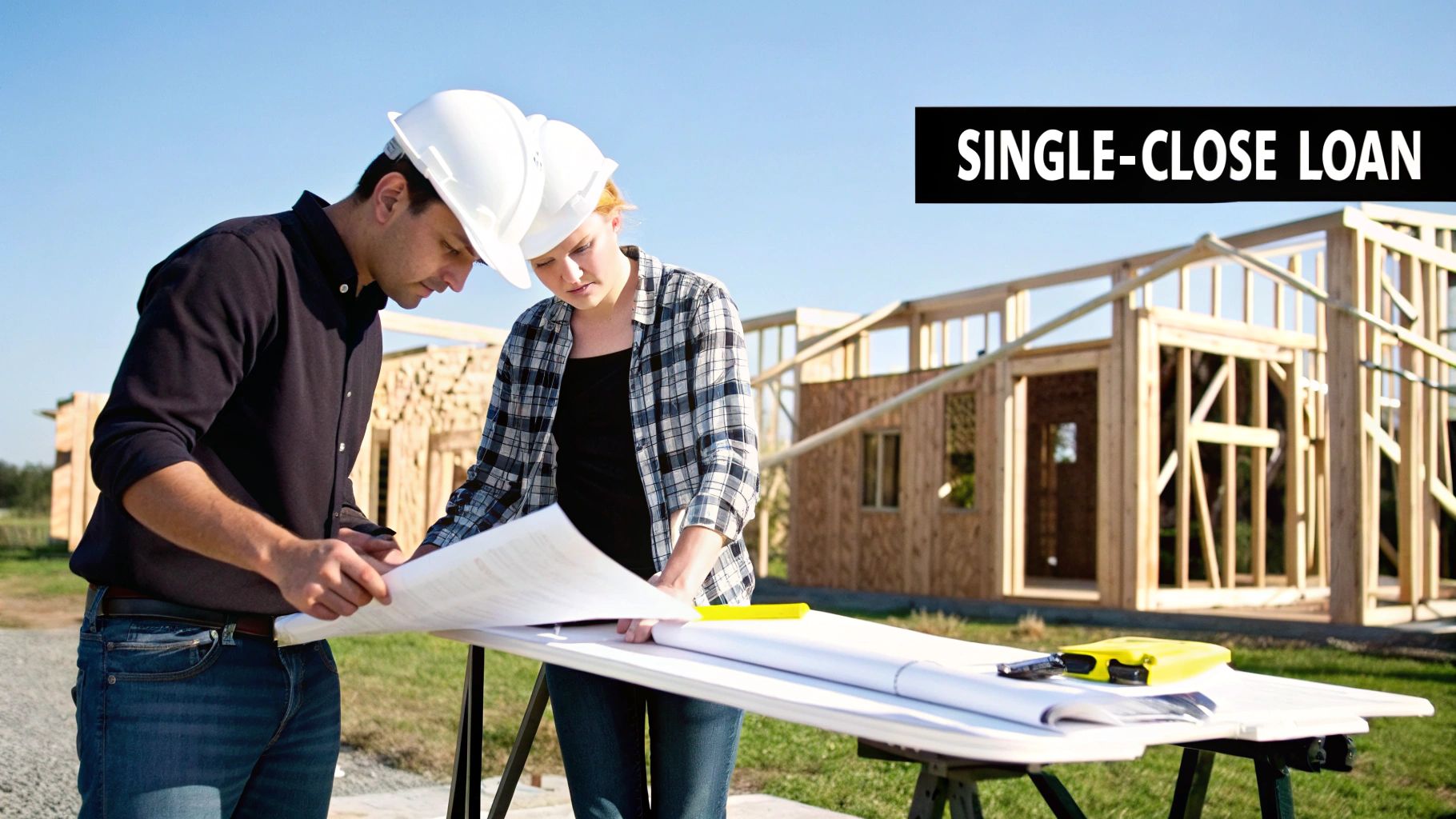
It's a single-close loan that covers the entire journey, from breaking ground to moving in. Once your home is built, it simply converts into a standard FHA mortgage, saving you a ton of hassle.
Unpacking The FHA Construction Loan
Think of it like this: your lender sets up a dedicated project account with all the funds needed to build your house. Instead of you juggling a land loan and a separate construction loan, this one loan covers it all from the start.
The money sits in an escrow account and is paid out to your builder in stages, known as "draws." A draw is only released after an inspector verifies that a specific milestone—like the foundation being poured or the framing being completed—is finished correctly. This system protects everyone involved.
Once the final inspection is passed and you get the keys, the construction loan automatically becomes your permanent FHA mortgage. This single-close process is a game-changer. It means you avoid the stress, duplicate paperwork, and extra closing costs that come with traditional financing, which often forces you to re-qualify and close a second time.
Deciding to build is a big step, so it’s worth understanding the fundamental differences between a remodel vs new construction to make sure this loan is the right fit for your vision.
How This Loan Simplifies Building
The beauty of this loan is in its simplicity and predictability. You lock in your interest rate before the first shovel hits the dirt, which shields you from any nasty market surprises while your home is being built. The whole point is to make building a new home more achievable, particularly for buyers who might not fit into the rigid box of a conventional loan.
Let's quickly recap some of the key features of this loan.
Here is a quick summary of the essential components of an FHA construction-to-permanent loan.
| Feature | Description |
|---|---|
| Loan Type | Single-Close Construction-to-Permanent |
| Down Payment | As low as 3.5% of the total project cost |
| Credit Score | Typically a minimum of 620 is required |
| Financing | Covers land, construction, and permanent mortgage |
| Interest Rate | Locked in before construction begins |
| Builder Approval | Builder must be vetted and approved by the lender |
| Inspections | Required at key construction stages for fund release |
This table highlights just how streamlined and accessible the process can be when structured correctly.
This loan isn’t just about getting the money; it’s about having a clear, secure roadmap from a set of blueprints to your finished home. It’s a financial tool that makes the dream of a custom-built house a reality for more people.
With this foundation in place, you’re ready to dig into the specific fha construction loan requirements we’ll cover next. Partnering with an expert lender is key—they can guide you through every step, from getting your builder approved to navigating that final inspection. Knowing these basics sets you up for a much smoother and more successful home-building journey.
Qualifying as a Borrower: What Lenders Look For
When you're applying for an FHA construction loan, lenders are essentially trying to build a complete picture of your financial health. They focus on three key areas: your credit history, the consistency of your income, and how you manage your existing debt. Think of it less like a test with a pass/fail grade and more like a puzzle they’re putting together. Each piece helps show them you’re ready to take on the project.
What's great about the FHA program is its flexibility, especially compared to conventional loans that can have some pretty rigid requirements. This accessibility is precisely why so many people who thought building a home was out of reach are able to make it happen.
The Magic Numbers: Your FICO Score
The first thing any lender will look at is your FICO score. It’s more than just a number; it’s a quick snapshot of your financial habits, and for an FHA loan, it directly influences how your loan is structured—specifically, your down payment. Understanding this is one of the most important FHA construction loan requirements.
You technically only need a 500 FICO score to be eligible. However, to get that amazing 3.5% down payment everyone talks about, you’ll need a score of 580 or higher. This is a world away from the 620-740 scores often demanded for conventional construction loans.
If your score is between 500 and 579, you'll need to put down 10%. While that’s more, it’s often still a better deal than you'd find elsewhere. In fact, HUD reports show this tiered system enables 35% more applicants with less-than-perfect credit to build their own homes. You can dig deeper into FHA loan standards to see how they create more paths to homeownership.
A FICO score isn't just a number; it's a story of your financial reliability. The FHA is willing to read that story more forgivingly than most, focusing on your ability to succeed as a homeowner rather than demanding perfection.
This approach gives you a clear target. If your score is just shy of 580, you know exactly what to work on to unlock that lower down payment and save thousands of dollars upfront.
Proving Your Income and Employment Stability
Once they’ve looked at your credit, lenders want to see that you have a reliable way to pay the mortgage. The general rule of thumb is a two-year history of stable employment. This doesn't mean you had to be at the exact same company for two years straight, but it does mean showing a consistent work history without long, unexplained gaps.
For most people with a regular paycheck, this is pretty simple. You'll usually need:
- Pay Stubs: Your most recent 30 days' worth.
- W-2 Forms: To show your earnings over the past two years.
- Tax Returns: Sometimes, two years of federal returns are also requested.
But what if you're self-employed, a freelancer, or your income is based on commissions? That’s where things get a bit more detailed, and having an expert in your corner really helps. Instead of W-2s, you’ll need to prove your income stability with two years of tax returns, profit and loss statements, and bank statements. An expert at Mortgage Seven can help you organize all this documentation to present the clearest possible financial picture to the lender.
Decoding Your Debt-to-Income Ratio
The last major piece of the financial puzzle is your Debt-to-Income (DTI) ratio. It sounds technical, but it’s a really simple concept: it compares how much you owe each month to how much you earn.
Think of your gross monthly income as a whole pie. Your DTI shows the lender how much of that pie is already spoken for by things like your car loan, student debt, or credit card payments.
How to Calculate Your DTI
- Add Up Monthly Debts: Tally up all your minimum required monthly payments.
- Find Your Gross Monthly Income: This is your total income before any taxes are taken out.
- Divide and Multiply: Divide your total monthly debts by your gross monthly income, then multiply by 100 to get the percentage.
For instance, if your monthly debts are $1,800 and your gross income is $5,000, your DTI is 36% ($1,800 ÷ $5,000 = 0.36).
The FHA generally likes to see a DTI ratio of 43% or less. But here again, there's flexibility. Lenders can sometimes approve borrowers with a DTI as high as 50% if there are "compensating factors," like an excellent credit score or a hefty savings account. Knowing your DTI beforehand gives you a huge advantage and lets you walk into the application process with confidence.
Understanding Down Payments and Mortgage Insurance

When you're getting ready to build a home with an FHA construction loan, two financial pieces are absolutely central: the down payment you bring to the table and the mortgage insurance that comes with the loan. Think of the down payment as your upfront commitment to the project, while mortgage insurance is the lender’s safety net. Getting a firm grip on both is essential for planning your budget and meeting the FHA construction loan requirements.
Your down payment is your "skin in the game," and the amount you'll need is directly tied to your credit score. If your credit score is 580 or higher, you can get in the door with a minimum 3.5% down payment. For those with scores a bit lower, between 500 and 579, the FHA requires a 10% down payment.
One of the biggest perks of the FHA program is its flexibility in where that down payment money comes from. You don't have to drain your life savings to make it happen.
Sourcing Your Down Payment Funds
The FHA is pretty accommodating about the source of your down payment, which is a huge relief for many first-time builders. This flexibility can make all the difference.
Here are the most common ways to pull your funds together:
- Personal Savings: The most common source, of course. This is money from your checking or savings accounts.
- Gift Funds: Family members are allowed to help out with a financial gift. The key word here is gift—it can't be a loan they expect you to repay. A formal gift letter confirming this is a must.
- Equity in Land: If you're ahead of the game and already own the lot you plan to build on, you may be able to use its equity to cover your down payment. This is a massive advantage.
Just remember, if you're using gift funds, the paperwork has to be perfect. Your lender will need a signed letter from the person giving you the money and will likely ask for bank statements to trace the funds. It’s all about ensuring everything is above board and meets FHA rules.
Decoding FHA Mortgage Insurance Premium
Beyond the initial down payment, every FHA loan comes with something called a Mortgage Insurance Premium (MIP). This is precisely why lenders are willing to offer loans with such low down payments—MIP protects them if a borrower defaults.
It’s not just one fee, though. MIP has two distinct parts that impact both your upfront closing costs and your monthly house payment.
FHA Mortgage Insurance is the financial backbone that makes these accessible loans possible. It reduces lender risk, opening the door for more people to build their dream homes with less money down.
First, there’s the Upfront Mortgage Insurance Premium (UFMIP). This is a one-time fee, currently 1.75% of your total loan amount. Most people don’t pay this out-of-pocket; instead, they roll it right into their loan balance.
Second, you have the Annual Mortgage Insurance Premium. Don’t let the name fool you—it’s paid monthly as part of your mortgage payment. The rate usually falls somewhere between 0.45% and 1.05% of your loan balance each year, depending on your loan term and how much you put down.
How FHA MIP Compares to Conventional PMI
It’s smart to see how FHA’s MIP stacks up against the Private Mortgage Insurance (PMI) you’d find on a conventional loan (when putting down less than 20%). They do the same job, but their costs and rules are worlds apart.
Here’s a comparative look at FHA Mortgage Insurance Premium versus the Private Mortgage Insurance you'd find on conventional loans.
FHA MIP vs Conventional PMI Comparison
| Insurance Type | Upfront Cost | Monthly Cost | Cancellation Policy |
|---|---|---|---|
| FHA MIP | 1.75% of the loan amount, usually financed into the loan. | Paid for 11 years or the life of the loan, depending on the down payment. | Cannot be canceled unless you refinance into a non-FHA loan. |
| Conventional PMI | Typically no upfront fee, but it is an option. | Paid until your loan-to-value ratio reaches 78%. | Can be requested for removal at 80% loan-to-value; automatically drops off at 78%. |
As you can see, the biggest difference lies in cancellation. With a conventional loan, PMI eventually goes away once you've built enough equity. With an FHA loan (and a 3.5% down payment), that mortgage insurance is with you for the life of the loan. It’s the trade-off for the incredible accessibility the program offers upfront. Knowing this helps you make the right long-term financial decision for your new home.
Meeting Property and Project Approval Standards
While getting your personal finances in order is a huge piece of the puzzle, it’s really only half the story. The Federal Housing Administration (FHA) is just as invested in the quality and viability of the home you plan to build. In fact, meeting their strict property and project standards is a non-negotiable step to getting your loan funded.
Think of it this way: the FHA is essentially a partner in your new build. They need to know the finished home will be safe, sound, and a solid investment for everyone involved—you, the lender, and them. This means the property itself has to clear a few key hurdles before a single nail is hammered.
Eligible Properties And Primary Residence Rules
First things first, the FHA is all about homeownership, not real estate investing. A core requirement is that the home you build must be your primary residence. This means you have to live in it for the majority of the year. You simply can't use an FHA construction loan to build a vacation getaway or a rental property.
The program is also pretty specific about the types of homes it will back.
Eligible property types generally include:
- Single-Family Homes: This is the bread and butter of FHA construction loans.
- Manufactured Homes: These are an option, but they must be brand new, placed on a permanent foundation, and meet strict HUD codes.
- Condominiums: You can build a condo, but only if the unit is part of an FHA-approved condominium project.
This tight focus on primary residences is what keeps the program true to its original mission: making homeownership more accessible.
The Critical Role Of The FHA Appraisal
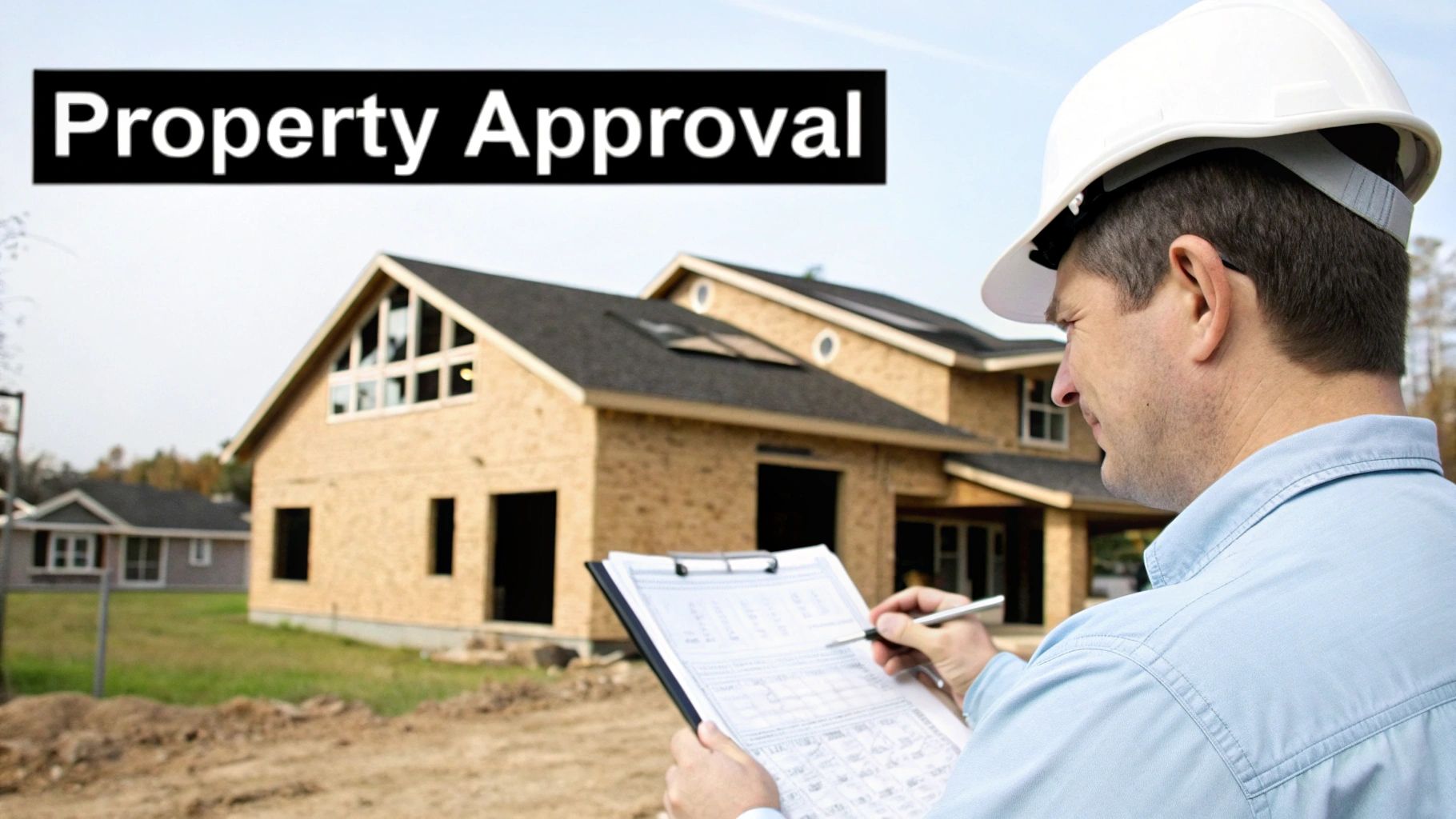
Before your loan gets the final green light, an FHA-approved appraiser steps in to play a crucial role. This isn't your standard appraisal for an existing house; it’s more like looking into a crystal ball. The appraiser isn’t just looking at the value of the empty lot—they have to determine the future value of the home after it's built.
To do this, they’ll pore over your builder's architectural drawings, the complete building plans, and a detailed list of materials. This is called a "subject-to-completion" appraisal, and its final number directly impacts the maximum loan amount your lender can offer. Having a detailed, accurate set of plans is absolutely vital here.
The FHA appraisal is your financial reality check. It confirms that the home you've dreamed up on paper will actually be worth what it costs to build, protecting you from starting a project that’s underwater from day one.
This forward-looking valuation is one of the most important safeguards in the whole process. It makes sure the project is financially sound and that the loan amount makes sense for the property's expected value when it's all said and done.
Navigating Construction Inspections And Fund Draws
Once your loan closes and construction kicks off, the FHA’s involvement doesn't stop. They keep a close watch through a series of inspections tied to how your builder gets paid. The loan funds aren't just handed over in a lump sum; they're held in an escrow account and released in stages, or "draws," as specific milestones are met.
A typical draw schedule might look something like this:
- Foundation: Funds are paid out after the foundation is poured and passes inspection.
- Framing: The next draw is approved once the home’s skeleton is up and gets the thumbs-up.
- Mechanicals: Money for plumbing, electrical, and HVAC is released after they're installed and inspected.
- Finishes: The final draws cover things like drywall, flooring, and other finishing touches.
Before a single dollar from a draw is released, an FHA-approved inspector visits the site. They verify that the work is done, matches the approved plans, and meets FHA quality standards. This staged process keeps the project on track and ensures the money is used correctly. It’s your protection against a builder getting paid for work that’s shoddy or incomplete, giving you peace of mind from foundation to finish.
How to Vet and Approve Your Home Builder
Picking the right builder is probably the single most important decision you'll make when building a new home. With an FHA construction loan, this isn't just a matter of finding someone you like; it’s a strict requirement. Your lender and the FHA need total confidence that the person building your home is qualified, reliable, and financially sound.
Think of your builder as the captain of the ship. They're in charge of everything from pouring the foundation to installing the last doorknob. Because of that, FHA guidelines demand that your builder be fully vetted and approved by the lender before a single dollar is disbursed. This process protects you, the FHA, and the lender from shoddy work or a project that goes belly-up halfway through.
This step is a cornerstone of meeting the overall FHA construction loan requirements. Working with an experienced brokerage like Mortgage Seven can be a huge help here. We often connect our clients in areas like Fairfax, Virginia with builders in our network who are already FHA-approved and know the process inside and out. For more details on the broader requirements, see our guide here: https://mtg7.com/construction-loan-requirements/
Key Builder Qualifications
Before your lender even looks at a builder’s portfolio, that builder has to clear a few basic, non-negotiable hurdles. This is the first line of defense to screen out anyone who isn't a legitimate professional.
The builder absolutely must provide proof of:
- State Licensing: They need to be a licensed general contractor in your state and be in good standing. No exceptions.
- Comprehensive Insurance: This means having both general liability insurance and workers' compensation coverage. It's a critical safety net.
- Financial Stability: Lenders will want to see the builder’s business financials to make sure they have the cash flow and resources to finish your home without running into trouble.
Getting these basics confirmed sets the stage for a successful build and tells the lender that you're working with a serious professional.
The Builder Vetting and Approval Process
Once you’ve found a builder who meets the minimum standards, the real vetting begins. Your lender will require a detailed package of documents from the contractor to formally approve them for your specific project. This is where you move from just checking boxes to really understanding what they can do.
The builder typically needs to submit a full packet, including:
- A Builder's Resume or Portfolio: This should highlight their experience, especially on homes similar in size and scope to yours.
- References from Past Clients: Your lender will want to talk to other homeowners who have gone through this exact process with them.
- Proof of a Positive Credit History: Just like you, the builder's financial responsibility is under the microscope.
When you're choosing a builder, you should also look closely at their commitment to quality after the job is done. A solid home builders warranty program is a great sign, as it shows they stand behind their work and provides you with long-term peace of mind.
Reviewing the Construction Contract
The construction contract is the legal glue holding this whole thing together. For an FHA loan, this contract has to be incredibly detailed, leaving zero room for interpretation. It’s far more than a price and a signature—it's the complete playbook for your project.
A well-structured construction contract is your ultimate protection. It clearly defines every expectation, deadline, and cost, ensuring that you and your builder are always on the same page and accountable to the FHA's standards.
Your contract must clearly spell out several key components:
- A Detailed Budget: This isn't a ballpark figure. It’s a line-item breakdown of every single cost, from lumber and labor to permits and paint.
- A Clear Draw Schedule: The contract must outline the specific construction milestones that trigger payments (or "draws") to the builder.
- The Final Completion Date: There needs to be a firm, agreed-upon deadline for when your home will be 100% finished and ready for you to move in.
By digging into these documents, the lender ensures the project is well-planned, financially sound, and set up for success from day one.
Mapping Your Loan Timeline From Start to Finish
Building a home with an FHA construction loan isn't a race; it's a carefully planned project with distinct stages. Understanding the full timeline, from the initial paperwork to moving day, is the best way to keep the process smooth and avoid surprises.
Think of it as a series of checkpoints. The loan is structured to protect you, your builder, and the lender by ensuring each phase is completed successfully before the next one begins. This methodical approach is what keeps your project on track and ensures your new home is built to last.
The Pre-Construction Phase
This is where all the critical groundwork happens. Before a single shovel hits the dirt, you'll be assembling your team, getting your finances locked in, and finalizing your vision on paper. It's the most important part of the process.
- Loan Pre-Approval: First things first, you'll work with a lender (like us at Mortgage Seven) to get pre-approved. We’ll take a look at your credit, income, and overall financial picture to establish a clear budget. This step gives you the confidence to start shopping for a builder and land.
- Builder Selection and Vetting: With a budget in hand, you'll find a licensed and insured builder you trust. Your lender then puts them through a rigorous vetting process, reviewing their financial stability, references, and past work to make sure they meet the FHA’s tough standards.
- Finalizing Plans and Appraisal: Once your builder is approved, you'll finalize the architectural plans and a line-item budget for the build. An FHA-approved appraiser uses these documents to determine the home's "as-completed" value—what it will be worth once finished. This appraisal is what sets your final loan amount.
The pre-construction stage is where you set yourself up for success. Getting the details right here—from the budget to the builder—prevents almost all of the headaches that can pop up later.
The infographic below breaks down the builder vetting process, a non-negotiable step in this initial phase.
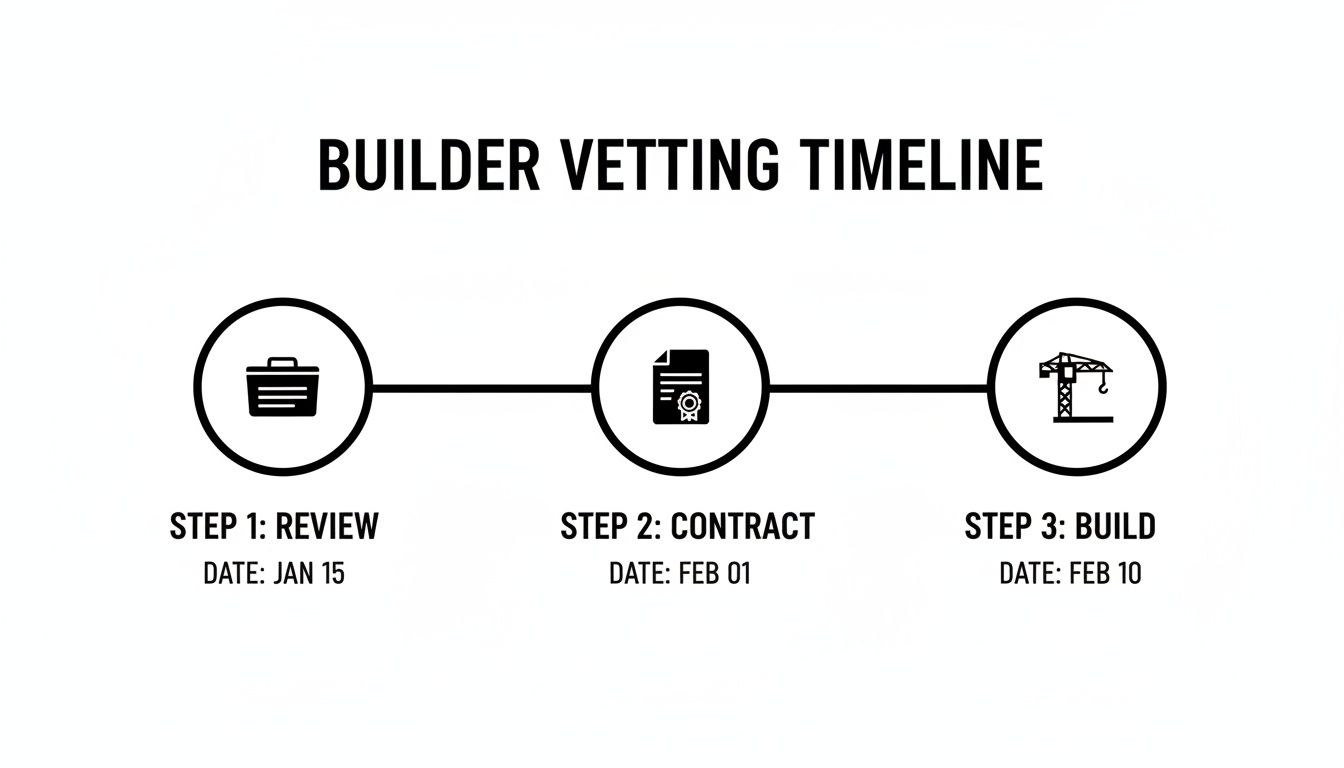
As you can see, the builder must be thoroughly reviewed and approved before a contract is signed and any construction can begin. This structured process protects everyone involved.
The Construction and Conversion Phase
After you close on the loan, it's time for the magic to happen. Your builder breaks ground, and your dream home finally starts taking shape.
Your loan funds aren't just handed over to the builder in a lump sum. Instead, they’re held in an escrow account. As the builder completes key milestones—like pouring the foundation, finishing the framing, or getting the roof on—they request a "draw." An FHA inspector then verifies the work is done correctly before the lender releases that portion of the funds. This draw system is a core part of the FHA construction loan requirements, ensuring the money is used as intended.
The FHA, established under the National Housing Act of 1934, has always set loan limits to keep pace with the market. For single-family homes, the FHA floor in low-cost areas is $541,287, while the ceiling in high-cost areas can go up to $1,249,125. After the 2008 financial crisis, FHA construction loans saw a huge surge, and they’ve since stabilized to represent about 10% of total FHA loan volume, according to HUD data. If you want to dive deeper, you can explore HUD's official announcements on these figures.
Final Steps to Homeownership
As the last coat of paint dries, a final inspection is scheduled. This is when the local building authority issues a Certificate of Occupancy, which officially declares your home safe and ready to live in.
With that certificate in hand, your loan automatically converts from a temporary construction loan into a standard, permanent FHA mortgage. You'll start making regular principal and interest payments, just like any other homeowner. It’s a seamless transition, and you can learn more about how a one-time-close construction loan makes this final step so straightforward.
Common Questions About FHA Construction Loans
When you're diving into the FHA construction loan process, a lot of "what if" scenarios pop up. Getting straight answers to these common questions is key to moving forward with confidence and making sure there are no surprises down the road.
Let's tackle some of the most frequent questions people have about what you can and can’t do with this unique home-building loan.
Can I Use an FHA Loan to Buy Land?
Yes, absolutely. The FHA one-time-close loan is built for this exact scenario—it lets you roll the cost of the land and the cost of construction into one single mortgage. This is perfect if you've found the perfect lot but don't own it yet.
What you can't do is use the loan just to buy a piece of land to sit on for some future, undecided project. The land purchase has to be part of an immediate plan to build.
One of the biggest wins for borrowers is if you already own your land. If you own the lot free and clear, you can often use its value as equity toward your down payment. This can significantly reduce or even eliminate the cash you need to bring to closing.
What Happens If Construction Costs Go Over Budget?
This is a big one, so it’s crucial to understand. The loan amount you get is finalized at closing and it will not change. If your builder runs into unexpected issues or material prices jump, the lender won't increase the loan to cover those overages.
That’s why having a personal contingency fund is non-negotiable. We strongly recommend setting aside at least 10-15% of the total construction cost in your own savings account. Think of it as a safety net. While your builder contract should address who pays for overruns, having your own cash reserves is the only real way to protect your project from delays.
Can I Do Some of the Construction Work Myself?
This is almost always a "no." FHA guidelines are pretty strict here—they require a licensed, insured, and approved general contractor to manage the entire build. This is a core part of the FHA construction loan requirements.
This rule protects everyone involved. It ensures a professional is in charge, the home is built to code, and the project stays on schedule, which is just as important to the lender as it is to you. The idea of "sweat equity," where you do some work yourself to save money, isn't allowed with this type of financing.
Ready to build your dream home in Virginia? The experts at Mortgage Seven LLC can guide you through every FHA requirement. Start your application today!
Leave a Reply