
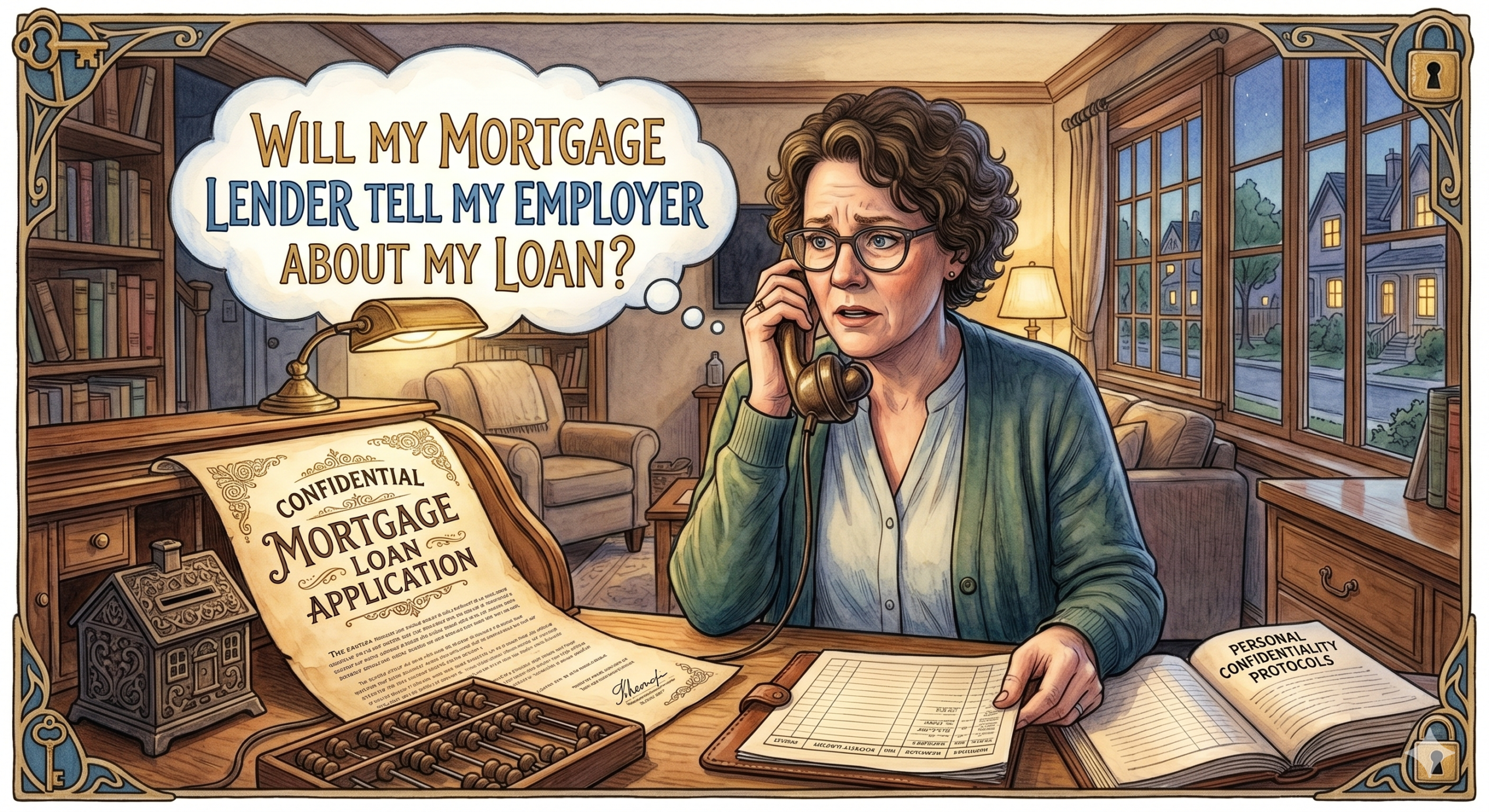
If you’re shopping for a mortgage, you might be wondering: Will my lender tell my boss that I’m buying a house or taking out a loan? It’s a fair concern — and one that more borrowers ask than you might think.
The short answer is no, your mortgage lender will not tell your employer about your loan. But your employer will be contacted during the process — just not for the reasons you might fear. Here’s everything you need to know.
Why Do Mortgage Lenders Contact Your Employer?
Mortgage lenders are required to verify that you are who you say you are and that you earn what you claim to earn. This process is called a Verification of Employment (VOE) and it is a standard part of every home loan application.
The lender is not reaching out to share information about you — they are reaching out to collect information about you. Specifically, they want to confirm:
- That you are currently employed
- Your job title and start date
- Whether your employment is full-time, part-time, or contract-based
- Your current salary or hourly rate
- Whether your employment is likely to continue
This is not gossip. It is a federally required step in the mortgage underwriting process.
What Does the Lender Actually Say to Your Employer?
When a lender contacts your employer’s HR department or payroll provider, they typically send a short written form or make a brief phone call. The conversation is straightforward and professional.
The lender will identify themselves as a mortgage servicer verifying employment for a loan application. They will ask a few factual questions and that’s it. They will not discuss the loan amount, the property you’re purchasing, your credit score, or any financial details.
Your HR department handles these requests regularly. To them, it’s routine paperwork — no different than a background check request from a new employer.
Will My Boss Find Out I’m Buying a House?
This depends on the size of your company. In large organizations, the VOE request is handled entirely by HR or an automated payroll system like The Work Number (operated by Equifax). Your direct manager is almost never involved and will likely never know.
In smaller companies where the owner or a manager handles HR duties directly, there is a chance they may become aware. However, there is nothing legally or professionally inappropriate about buying a home, and most employers react with no concern whatsoever.
If you work for a small business and this worries you, consider having an open conversation with your employer before closing. Many borrowers find that transparency reduces stress far more than secrecy.
Is Your Mortgage Information Private?
Yes. Mortgage lenders are governed by strict federal privacy laws, including:
- The Gramm-Leach-Bliley Act (GLBA) — requires financial institutions to protect consumer financial information
- The Fair Credit Reporting Act (FCRA) — governs how your credit and financial data can be used and shared
- HUD and CFPB regulations — further restrict how lenders handle your personal data
Your lender cannot legally disclose your loan details, purchase price, interest rate, or financial situation to your employer, your neighbors, or anyone else not directly involved in the transaction.
When Will the Lender Contact My Employer?
Most lenders verify employment at least twice during the mortgage process:
- At the time of application — to confirm your current employment and income
- Just before closing (typically within 10 days) — to confirm you are still employed and your status has not changed
This second verification is important. If you leave your job, get laid off, or switch to a new employer between application and closing, your lender must be notified immediately. Failing to do so can result in the loan being denied at the closing table.
What If I’m Self-Employed?
Self-employed borrowers go through a different verification process. Instead of employer contact, lenders typically require:
- Two years of personal tax returns (IRS Form 1040)
- Two years of business tax returns
- A year-to-date profit and loss statement
- Business bank statements
If you operate an LLC or S-Corp, your lender may also contact your CPA or accountant to verify your business’s existence and stability.
Tips for a Smooth Employment Verification Process
Give your HR department a heads up. A quick heads up to HR that they may receive a mortgage verification request can prevent delays. It also ensures the right person handles it.
Make sure your pay stubs and W-2s match your application. Discrepancies between what you stated on your application and what your employer reports are one of the most common causes of underwriting delays.
Avoid changing jobs mid-application. If at all possible, do not switch jobs between loan application and closing. Lenders view employment changes — even lateral ones — as risk factors.
Be transparent with your loan officer. If you have any unusual employment circumstances such as a recent raise, a gap in employment, or a job change, tell your mortgage broker or loan officer upfront. Surprises discovered by underwriters always take longer to resolve than issues disclosed at the start.
The Bottom Line
Your mortgage lender will contact your employer — but only to verify basic employment facts as required by federal lending guidelines. They are not sharing your personal financial information, your loan details, or anything that would compromise your privacy or professional reputation.
The process is routine, confidential, and handled professionally on both sides. Your focus should be on gathering your documents, staying employed through closing, and working with a mortgage broker you trust to guide you through the process.
Have questions about the mortgage process? As a licensed mortgage broker serving Virginia and the surrounding area, I’m here to help you navigate every step — from application to closing. Contact me today for a free consultation.